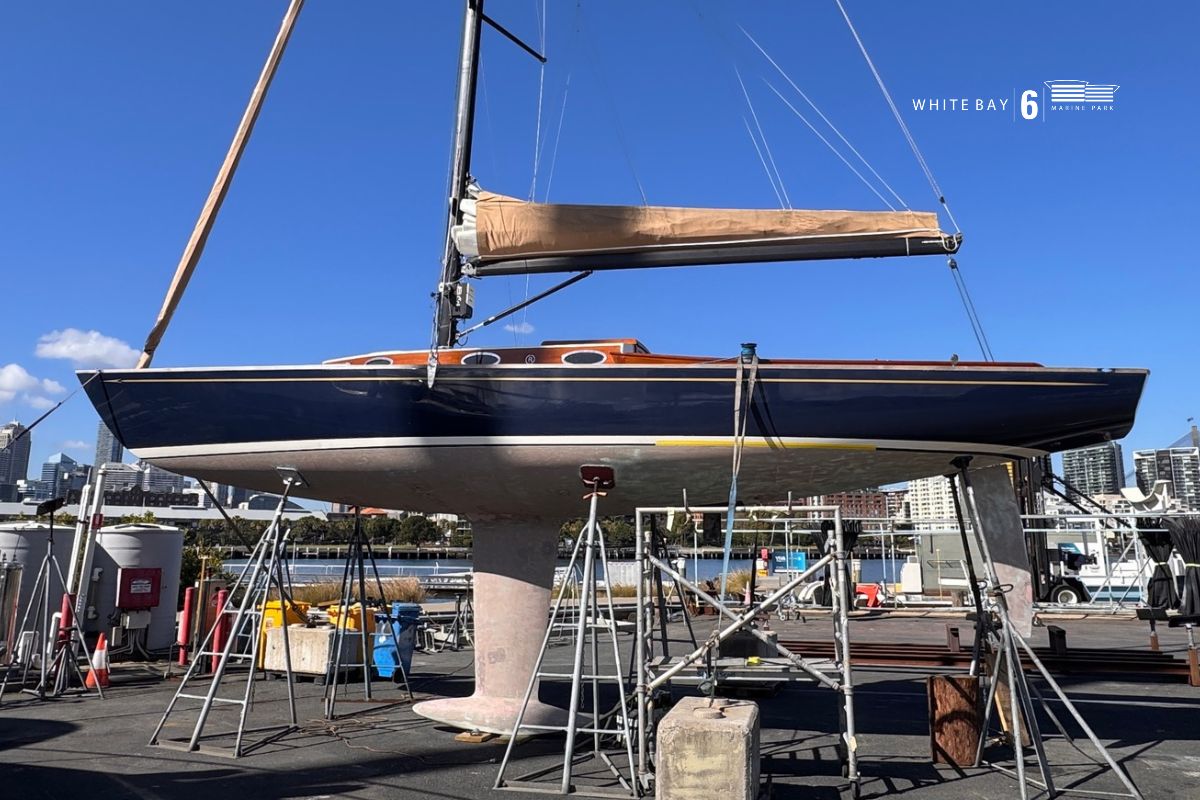
Applying a new coat of antifoul isn’t always as simple as painting over what’s already there. The condition of the existing coating, the type of antifoul previously used and the product being applied all play an important role in achieving a reliable, long-lasting finish.
For boat owners considering their next haul-out, understanding these factors is essential, particularly if you’re thinking about changing from a soft, ablative antifoul to a hard antifouling system.
At White Bay 6 Marine Park, our team understands that every vessel and coating system is different. Knowing what’s already on your hull is the first step towards determining the right preparation and antifouling approach.
Can You Apply New Antifoul Over Existing Paint?
In some cases, a new antifouling coating can be applied over an existing one. However, compatibility should never be assumed.
Different antifouling products are formulated to work in different ways. Even if the existing paint appears to be in reasonable condition, the new coating may not adhere properly or perform as intended if the two systems are incompatible.
Before any new antifoul is applied, the existing coating needs to be assessed. Its type, condition and history can all influence what preparation is required and whether the old coating can remain in place.
This is where advice from an experienced antifouling team can make a real difference. Rather than risking an incompatible combination, it’s important to establish the appropriate coating system for your vessel.
Switching From Soft to Hard Antifoul: What You Should Know
Changing from soft to hard antifoul is one situation where the existing coating deserves particular attention.
Soft, or ablative, antifoul is designed to gradually wear away during use, helping to release its active ingredients over time. Hard antifoul is designed to retain a more durable coating, with its performance depending on the specific product formulation.
Because these coatings behave differently, applying a hard antifoul directly over an existing soft coating is not necessarily suitable.
Depending on the products involved and the condition of the hull, the existing coating may need to be removed. In other cases, a manufacturer-approved primer or barrier system may be an option. The correct approach depends on the specific products and their compatibility requirements.
There is no single changeover method that suits every boat. Choosing the right system requires an understanding of the existing coating, the vessel’s use and the manufacturer’s recommendations.
What Can Happen If Coatings Are Incompatible?
Getting the coating combination wrong can lead to problems that may not become obvious until after the vessel returns to the water.
Potential issues include:
- Poor adhesion: The new coating may not bond correctly to the existing surface.
- Peeling, cracking or flaking: Incompatible products or inadequate preparation can compromise the finish.
- Premature coating failure: The antifoul may not perform as expected, potentially requiring additional work.
- Unnecessary costs: Correcting a failed coating system can involve extra preparation, paint removal and another haul-out.
The best way to avoid these problems is to establish the right coating system before work begins, rather than relying on assumptions about what is already on the hull.
Why Professional Assessment Matters
Antifouling is about more than choosing a paint colour or applying another coat. The existing coating, hull condition, vessel usage and intended antifoul system all need to be considered together.
An experienced team can help identify the relevant compatibility requirements, determine what preparation may be needed and ensure the selected approach aligns with the product manufacturer’s guidance.
This is especially important when changing antifoul types, working with an unknown coating history or dealing with paint that is already showing signs of deterioration.
For boat owners, seeking expert advice early can help avoid preventable coating problems and make the most of the next haul-out.
Talk to the Team at White Bay 6 Marine Park
If you’re unsure what antifoul is currently on your boat, or you’re considering switching from soft to hard antifoul, it’s worth getting the right advice before your next application.
The team at White Bay 6 Marine Park can help you understand the considerations involved in your antifouling project and the importance of selecting a suitable system for your vessel.
Rather than taking a one-size-fits-all approach, start with the condition of your hull, the coating already in place and the outcome you want to achieve.
Planning your next haul-out? Contact White Bay 6 Marine Park to discuss your antifouling requirements and the next steps for your vessel.